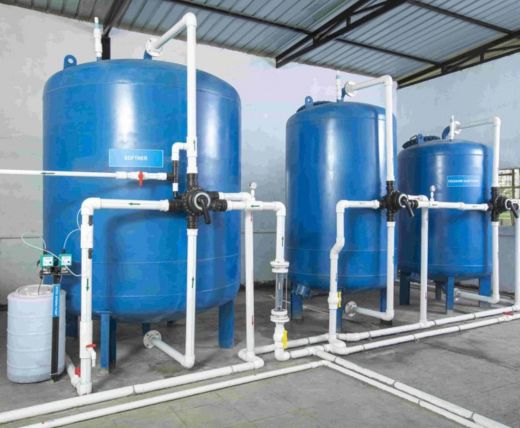
Reliable water softening plants designed to reduce hardness in water and help prevent scale formation in pipelines, equipment and water treatment systems.
Hard water contains dissolved calcium and magnesium salts that can lead to scaling, reduced heat-transfer efficiency, increased maintenance requirements and operational problems. Water softening plants use ion-exchange technology to reduce hardness and provide softened water for a wide range of commercial and industrial applications.
Inchem Corporation provides requirement-based water softening solutions designed according to raw water quality, hardness levels, flow requirements and application conditions.
Water softening plants are water treatment systems used to reduce hardness-causing minerals, primarily calcium and magnesium, from raw water. The process helps produce softened water that can be used in applications where hard-water scaling may affect equipment performance.
Inchem Corporation provides water softening plants for commercial buildings, hotels, hospitals, industries, manufacturing facilities, cooling systems, boilers and other applications requiring controlled water hardness.
The system is selected according to raw water analysis, hardness concentration, required flow rate, operating conditions and end-use requirements.
Proper water softening can help reduce scale deposits, maintain cleaner water circuits and support the efficient operation of connected equipment.
Water softening plants help reduce calcium and magnesium ions responsible for water hardness.
Softened water helps minimize scale formation in pipelines, heat exchangers, boilers and other equipment.
The system can be designed according to water quality, flow rate and specific application requirements.
Helps minimize hard-water scale deposits in water circulation and process equipment.
Supports the protection and reliable operation of boilers, heat exchangers, cooling systems and pipelines.
Reduced scale accumulation can help maintain effective heat transfer in applicable equipment.
Controlling water hardness can help reduce scale-related cleaning and maintenance.
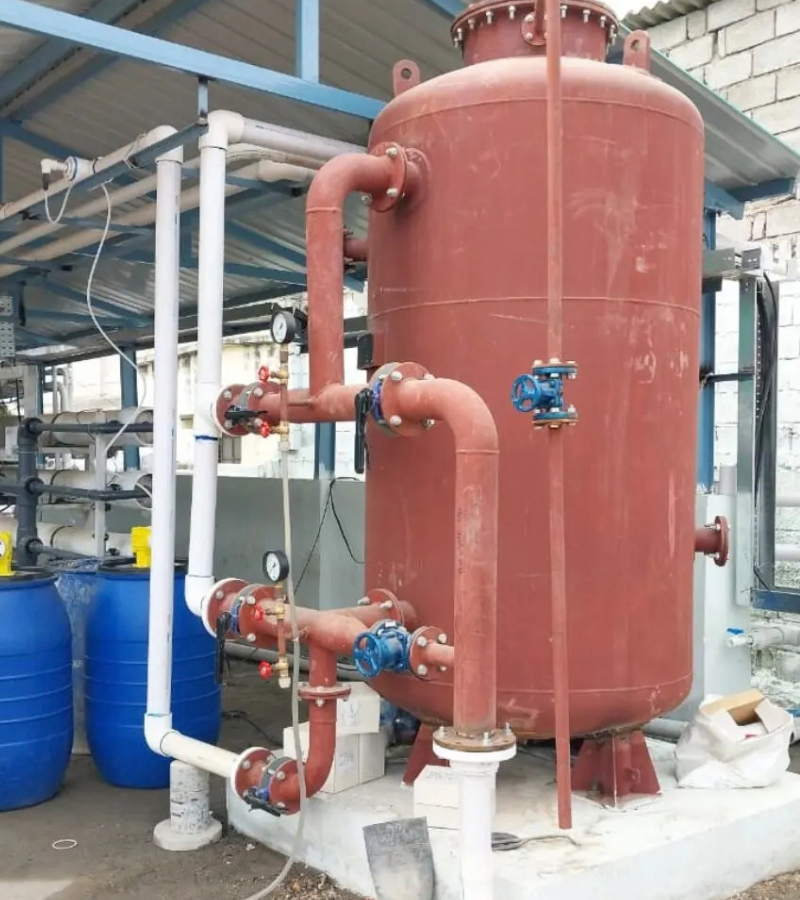
Water softening plants can be used across a wide range of commercial, industrial and institutional applications where controlling water hardness is important.
| Specification | Details |
|---|---|
| Service Type | Water Softening Plant |
| Treatment Process | Ion Exchange |
| Primary Purpose | Reduction of Water Hardness |
| Target Minerals | Calcium & Magnesium |
| Applications | Commercial, Industrial & Institutional |
| Product Scope | Water Treatment & Softening Solutions |
| System Approach | Requirement-Based Water Treatment |
| Suitable For | Process Water, Boiler & Cooling Applications |

Talk to our team about your project requirements and product specifications.
Get In TouchA water softening plant is a water treatment system designed to reduce hardness-causing minerals, mainly calcium and magnesium, from water.
Water softening helps control scale formation caused by hard water and can support the efficient operation of boilers, heat exchangers, cooling systems and pipelines.
Most conventional water softeners use an ion-exchange process in which hardness ions such as calcium and magnesium are exchanged with sodium ions.
Water softening plants are used in industries, hotels, hospitals, commercial buildings, manufacturing facilities, boiler systems, cooling systems and other applications requiring softened water.
Inchem Corporation provides specialised water treatment and filtration solutions for commercial, industrial and infrastructure applications. Our solutions include water softening plants, chilled water filtration, condenser water filtration, chemical dosing systems, chemical flushing and other water management technologies.
Our water softening solutions are designed to help control water hardness, minimize scale formation and support the reliable operation of water-based equipment.
We focus on providing practical, requirement-based solutions according to raw water quality, system capacity, operating conditions and individual project requirements.